Why Can Patterned Clothing Be a Problem on Live Dealer Streams?
A patterned shirt can look perfectly ordinary in person and strangely prominent on a live dealer stream. Fine stripes may shimmer. A bold floral print can seem to jump against a patterned wall. Even a small logo can pull the eye away from the table. That mismatch is not a matter of taste, and it does not mean dealers need to dress like movie-casino extras. It comes down to how cameras, lighting, backgrounds and small screens handle visual information.
Live studio broadcasts are designed to make a game readable while giving the room a sense of occasion. The dealer, cards or wheel, table and studio environment all compete for space in the frame. Clothing is part of that composition. When a garment draws more attention than intended, it can interrupt visual hierarchy, especially for someone watching on a phone browser access rather than a large screen.
For studios and wardrobe teams, the challenge is not to eliminate personality. It is to make sure a jacket, blouse or tie works with the set and remains clear on camera. Understanding why patterns can cause trouble helps explain the choices behind a polished broadcast—and why a casino’s visual character is about more than glitter and grand staircases.
Casino glamour is a visual vocabulary, not a dress code
Casino imagery has a recognizable visual vocabulary: crisp table edges, reflective surfaces, rich colors, considered lighting and a sense of ceremony around the game. In a physical venue, those elements help establish atmosphere and guide visitors through a large space. A live studio borrows from that vocabulary but has to make it work inside a carefully framed scene.
Think of the difference between a destination such as the Casino de Monte-Carlo and a compact broadcast set. The former is experienced through architecture, movement, sound and scale. A stream compresses a room into a rectangular image. It needs to suggest occasion quickly, often through a few deliberate details: the curve of a table, a chandelier, a textured wall or a carefully chosen color scheme.
CNA Luxury, the Channel NewsAsia platform, has covered hospitality and design through the lens of places and experiences. That kind of coverage helps show why a memorable interior is rarely just a pile of decorative objects. Materials, sightlines and lighting work together. In a studio, the same principle applies, but with a camera deciding what viewers notice first.
This is where casino glamour can be misunderstood. It does not require every person in frame to wear a dramatic print or a sparkling outfit. The room may already have enough visual character. A patterned garment can add useful contrast—or compete with the very backdrop intended to create the atmosphere.
How a pattern becomes an unexpected attention grab
The camera does not interpret clothing the way an in-person guest does. Viewers see a stream that has been framed, compressed and displayed on screens of different sizes. The image may also be scaled to fit a phone browser, where fine details are harder to distinguish. Under those conditions, patterns can behave in unexpected ways.
Small repeats can flicker or shimmer
Very fine stripes, checks and tightly repeated motifs contain lots of small edges close together. When the camera captures those edges and the stream is resized, the pattern can appear to ripple, flicker or shimmer. This is sometimes described as a moiré effect. It is not necessarily visible in a mirror or on the studio floor; it can arise from the interaction between the fabric, camera sensor, image processing and screen.
That visual movement is especially distracting in a mostly still shot. The dealer may be speaking calmly, while a small area of their shirt seems to vibrate. The eye notices the motion because it is unexpected, not because the garment is objectively loud.
High contrast makes the pattern compete
A dark-and-light check or a sharply contrasted print can create more visual activity than a solid color. If the table has strong markings or the wall behind the dealer has repeated motifs, the garment adds another layer of edges. The result can be a scene where several elements ask for attention at once.

That is the “clashes with backdrop” problem. It does not always mean the colors clash in the conventional sense. A navy-and-white print might coordinate beautifully with a navy set, yet its tight contrast can still compete with the table or wall once the camera compresses the image.
Movement changes how clothing reads
Dealers move their arms, turn slightly and reach across the table. A pattern that looks quiet in a static portrait can become more noticeable when it moves through the frame. Sleeves may cross a felt surface; a jacket lapel may shift under the light; a tie may swing while the dealer handles equipment.
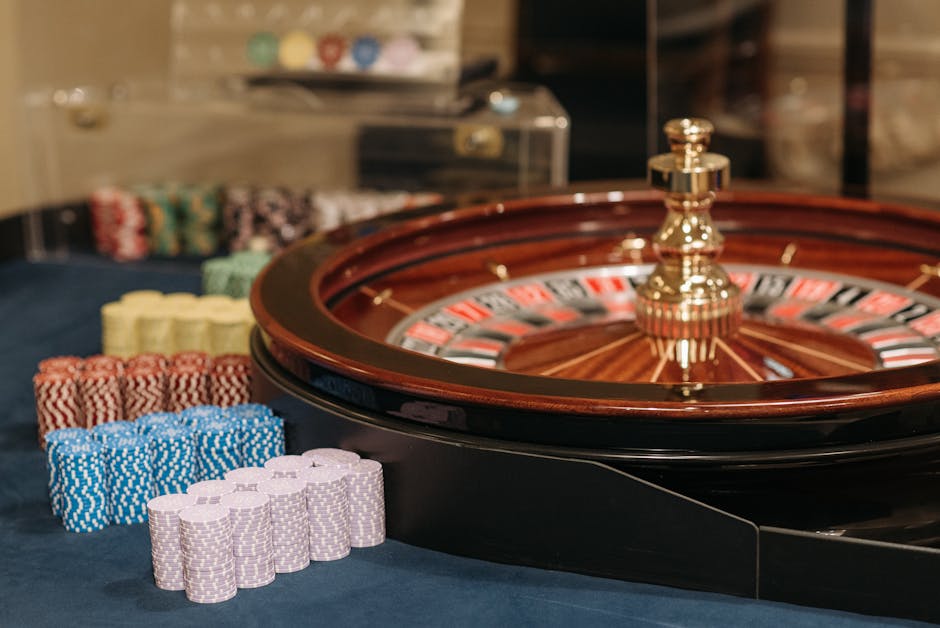
Patterns can also create an unexpected attention grab when they sit near a key action area. If a bright motif moves beside the cards or wheel, viewers may follow the garment instead of the game. That is a composition issue, not a judgment about the person wearing it.
Interior design elements create occasion—and visual competition
A studio set has a job beyond looking attractive. It should establish a mood, frame the action and help viewers understand where to look. Designers use details such as table materials, wall finishes, lighting, screens and decorative objects to create occasion without overwhelming the gameplay.
Those details form a visual hierarchy. In a typical broadcast, the game surface and dealer need to remain easy to find. The set can provide context around them, while smaller accents give the scene depth. If every element is equally bold, there is no clear order for the eye to follow.
Clothing becomes part of that hierarchy. A solid, well-chosen color can separate the dealer from the background and keep the image calm. A pattern may be useful when the backdrop is plain and the garment does not introduce distracting movement. But when the set already includes strong textures, metallic details or repeated geometry, another busy surface may overload the frame.
Visual hierarchy is also about movement through a room
In a physical casino, interior design can guide people through a room with changes in light, flooring, sightlines and focal points. A live broadcast has no literal path for a viewer to walk. Instead, the camera creates a sequence of attention: first the table, then the dealer’s gesture, then perhaps a detail of the set.
Designers and camera operators manage that sequence through framing, focus and lighting. Wardrobe can support it by keeping the human figure distinct from the background. It can undermine it when a print echoes the set so closely that the dealer blends in, or when a high-contrast garment becomes the most noticeable surface in the shot.
This is why “more decoration” is not always “more atmosphere.” A decorative panel, reflective trim or elaborate garment may look impressive in isolation but take space—visual space, in this case—from what viewers need to follow. The goal is not austerity. It is a readable balance between action and setting.
Mobile screens make selective detail essential
On a television or desktop monitor, viewers can pick up fine details in a shirt, a table edge and the room beyond. On a phone, those details are reduced to a much smaller image. People may also watch while holding the device at an angle, in a bright room or with the stream displayed in a compact window.
For viewers using phone browser access, with no required app download, the convenience is straightforward: open a mrq mobile casino browser and watch. But that convenience makes responsive presentation important. A stream has to remain legible across different devices, screen sizes and connection conditions. Fine patterns are more likely to collapse into visual noise as the image shrinks or loses detail.
Compression can make the issue more pronounced. Live video is transmitted as a stream of changing images, and small, busy textures can be harder to reproduce cleanly than broad areas of color. The pattern may look sharper in a studio monitor than it does on a phone—or the reverse, depending on the fabric, lighting and display.
Selective detail is therefore a useful design principle. A set might have a textured wall, but keep the table relatively uncluttered. A dealer’s outfit might include one modest accent rather than several competing motifs. The broadcast can still feel considered and distinctive without asking a small screen to resolve too much at once.
Visual choice Possible camera effect Design consideration Fine stripes or tiny checks Shimmering, flicker or moiré Test the garment on camera at the stream’s actual output size High-contrast print Pulls attention from the table or face Compare the print’s contrast with the set and game surface Pattern similar to the backdrop Dealer may visually blend into the background Choose separation through color, scale or fabric finish Large, bright motif near the hands Movement may compete with gameplay Keep action areas visually clear during a full movement testWhat studios can do without turning wardrobe into a uniform
The answer is not to ban patterns. That would be a blunt response to a technical and compositional problem. Studios can instead test wardrobe in the context where it will appear: on the set, under broadcast lighting, through the intended camera and at phone-sized playback.
-
Check the complete frame. A garment should be assessed beside the table, wall and lighting—not only on a hanger or in a fitting-room mirror.
-
Review at more than one size. Look at the image on a studio monitor and on a small phone display. Fine details may behave differently at each scale.
-
Test movement, not just a still pose. Ask the wearer to reach, turn and handle the equipment as they would during a broadcast.
-
Watch for reflective surfaces. Sequins, glossy finishes and metallic threads can catch light unpredictably. They may create glare or bright points that compete with other details.
-
Keep contrast intentional. Contrast can help the dealer stand out, but several high-contrast elements in one frame can make the image harder to scan.
These checks are about visual comfort and clear presentation, not about implying that clothing affects game outcomes. A jacket pattern does not change the rules, the cards or the odds. It changes how the image reads. Keeping that distinction clear matters: production design shapes the viewing experience; it does not alter the underlying game.
A polished stream leaves room for the game
Patterned clothing can become a problem when the camera reads patterns differently from the way a person does in the room. Fine repeats may shimmer; strong contrast may compete with the table; movement may turn a quiet print into an attention grab. On a phone screen, the effect can be amplified because viewers have less space to separate details.
Good studio design treats wardrobe as one part of a larger composition. The room should feel like a place with character, not a stage dressed to imitate a film stereotype. Interior elements can create occasion, while thoughtful framing and selective detail keep the action easy to follow. That balance is what makes a live dealer stream feel designed rather than merely decorated.
So the practical question is not “Are patterns bad?” It is “What does this pattern do in this particular frame?” If it supports the set, reads clearly at small sizes and stays out of the way of the action, it can work. If it flickers, blends into the backdrop or pulls attention from the game, a simpler garment may serve the broadcast better.